Cairo - Arab Iron and Steel Union Media Center
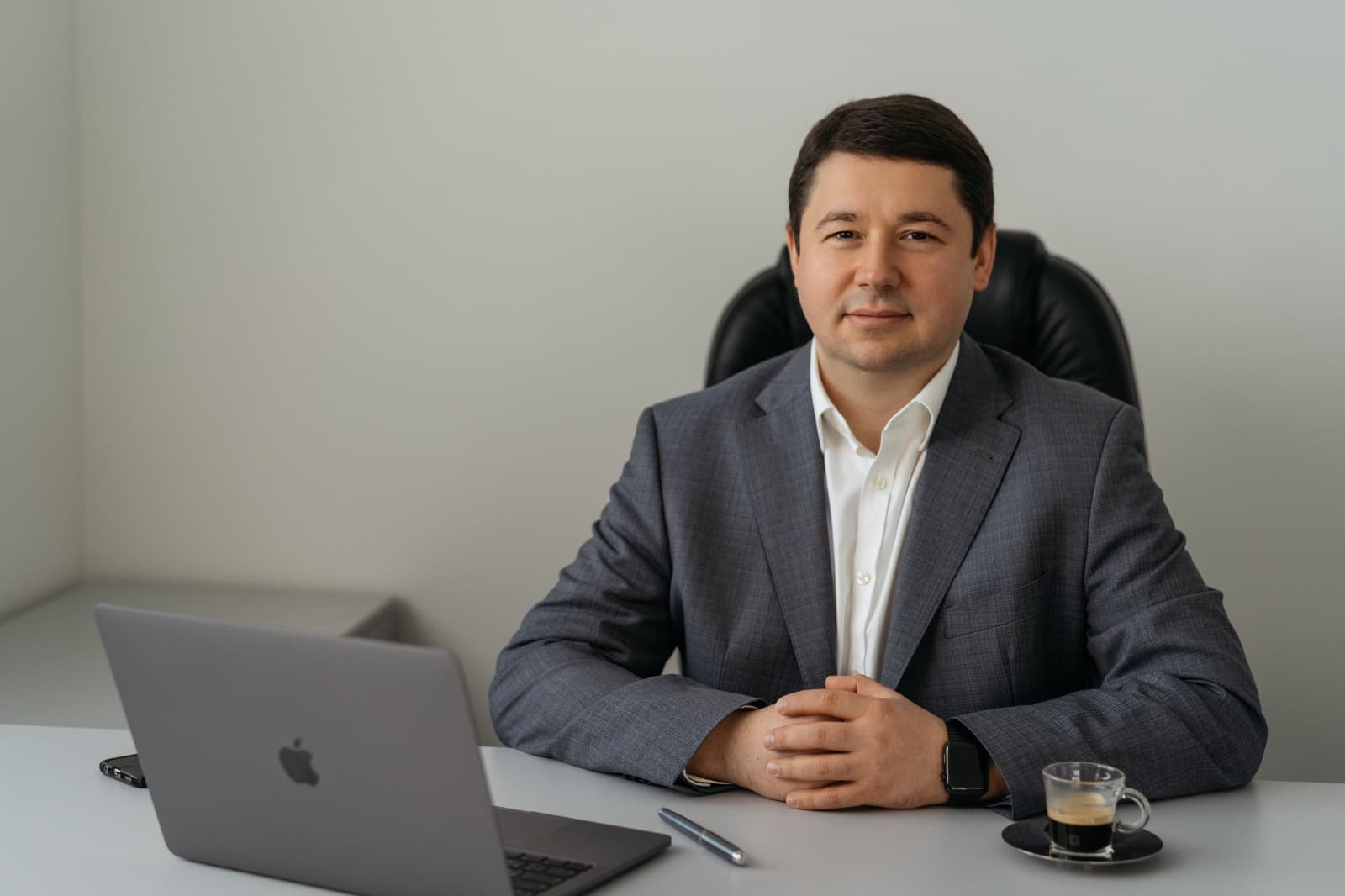
Stanislav Zinchenko, CEO of GMK Center and Chairman of the Environmental and Sustainable Development Committee at the European Business Association, reviews the features of the biggest transformation the global steel industry is undergoing, emphasizing that the coming years will not be an extension of the industry model that prevailed for decades, but rather the beginning of a new era in which production and trade centers, and sources of competitive advantage, will change.
Zinchenko expects scrap to become a strategic material in the coming years, given that dozens of countries are imposing restrictions on its exports, while scrap prices in the European Union may rise by about 15-20% by the end of 2026, while confirming at the same time that Europe accounts for 90% of Ukrainian steel exports.
Zinchenko believes that the global steel industry is facing a structural transformation driven by five key factors: slowing demand growth, surplus production capacity, rising trade protectionism, high energy costs, and accelerated decarbonization, in addition to a growing trend towards decoupling iron and steel production, so that direct reduced iron and hot-briquetted iron production processes move to regions with the most competitive energy and raw materials.
Zinchenko warns that global steel trade is rapidly moving towards greater regionalization, with the expansion of tariffs, quotas, and anti-dumping measures, as well as carbon-related barriers, foremost among them the European Carbon Border Adjustment Mechanism (CBAM).
While Europe faces increasing pressure on its competitiveness, Zinchenko believes that India represents the rising center of gravity in the global steel market, with its production and demand expected to continue growing over the next ten to twenty years, at a time when China will continue to export large quantities of steel with a decline in its domestic consumption.
As for Ukraine, he believes it has an opportunity to rebuild a steel industry radically different from its previous model, relying more on low-carbon technologies and benefiting from its large iron ore resources and proximity to the European market. Zinchenko estimates that the needs for rebuilding Ukrainian infrastructure, estimated at about 500 billion euros, could generate demand ranging from 40 to 70 million tons of steel over a period that could extend to ten years.
He also expects the impact of CBAM to double in 2029 and 2030, with rising carbon prices and declining free emission allowances, making the cost of carbon a more significant factor in production, trade, and investment location decisions.
In the interview, Zinchenko provides a comprehensive overview of the future of the steel industry, extending from China, India, and Europe to Ukraine and the Middle East and North Africa, addressing the future of blast furnaces and electric arc furnaces, the race for raw materials and scrap, the future of DRI and HBI, green steel, and the impact of CBAM in reshaping the global trade map.
Details of Zinchenko's full vision on the future of the global steel industry, the implications of CBAM, and the opportunities for the Middle East and Ukraine, in the full interview within the Arab Iron and Steel Union Media Center bulletin tomorrow.