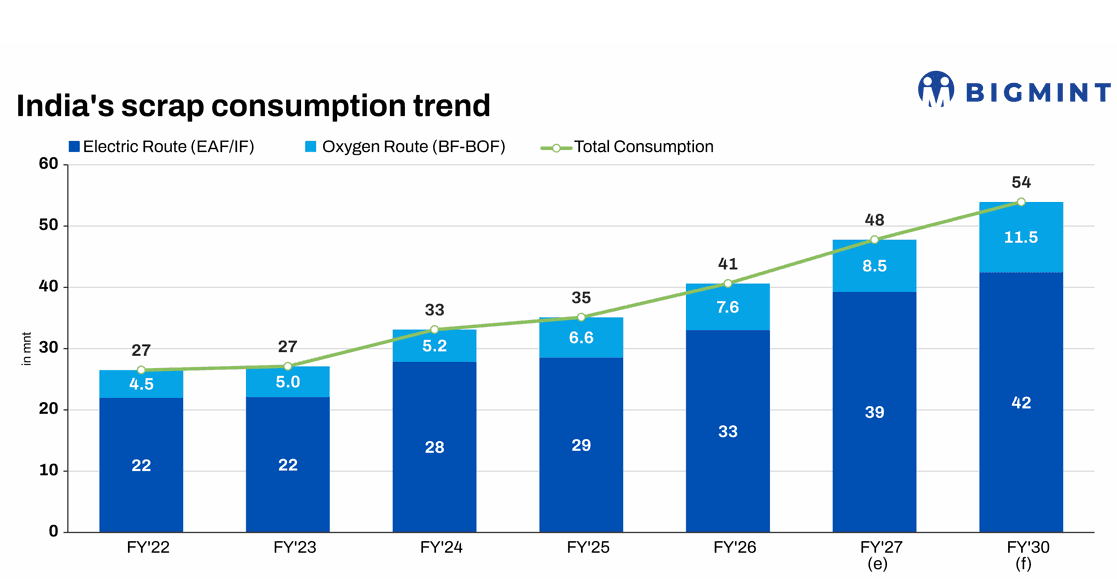
The Indian steel industry is heading towards a significant increase in steel scrap consumption in the coming years, driven by the growth in steel production and the expansion of electric arc furnace (EAF) routes. According to forecasts by BigMint, an Indian firm specializing in price reporting and commodity and metals sector consulting, scrap consumption is expected to rise by 32.8% to approximately 53.9 million tons by fiscal year 2030, compared to 40.6 million tons in fiscal year 2026.
This coincides with expectations of a rise in crude steel production from 169 million tons to 225 million tons during the same period, an increase of nearly 33%.
On the supply side, BigMint anticipates domestic scrap production to grow by about 30% to 46.9 million tons by 2030, compared to 36.1 million tons in 2026, supported by the expansion of the steel base and an increase in vehicles, facilities, and goods reaching the end of their lifespan.
Despite the growth in domestic production, India will face a gap of approximately 7 million tons between domestic supply and expected consumption, keeping imports a significant factor in securing the needs of the mills.
According to the report, the biggest challenge lies in converting India's growing scrap inventory into usable raw materials for the steel industry, while maintaining access to imported materials. Increasing global competition for scrap and the potential for export restrictions could heighten supply risks for Indian mills, making diversification of supply sources, domestic processing, and flexibility in using alternative metals crucial.