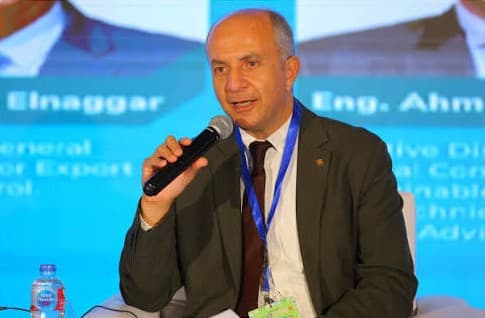
Interview by Amany Ibrahim - Media center of Arab Iron and Steel Union (AISU)
- AISU is capable of leading Arab programs for capacity building and sustainability.
• Technology, finance, and legislation are the most prominent challenges for the industry; we call for an Arab initiative to build the capacities of manufacturers.
• Integration between Arab manufacturers is the path to opening new markets and facing common challenges.
• Reducing production costs is the real driver for decarbonization; energy conservation achieves savings that may reach 35%.
• Localizing Arab technology is a necessity to reduce dependence on the outside and enhance competitiveness.
• The green economy is a pillar for achieving the goals of Egypt’s Vision 2030.
• Finance, legislation, and awareness are the most prominent challenges of sustainable transformation.
The Environmental Compliance and Sustainable Development Office at the Federation of Egyptian Industries continues its role in supporting industrial facilities by spreading concepts of energy efficiency, cleaner production, and the circular economy, and building the capacities of factories to comply with international requirements, which enhances their ability to compete in global markets.
In this interview, Engineer Ahmed Kamal Abdel-Moneim, Executive Director of the office, presents a practical vision for the future of the iron and steel industry, confirming that reducing emissions is not a goal in itself, but a means to reduce production costs and enhance the ability to compete. He also calls for broader Arab integration in the fields of technology transfer and capacity building, and proposes a vision for joint cooperation with the Arab Iron and Steel Union to transfer technical expertise to Arab companies.
He also reviews the most prominent challenges facing iron and steel plants, and his vision for the role of technology, finance, the circular economy, and Arab integration in building a more efficient and sustainable industry, while proposing a vision to expand the capacity-building experience implemented by the office to include iron and steel plants in various Arab countries, in cooperation with the Arab Iron and Steel Union.
The Environmental Compliance Office is a technical arm to support industrial sustainability.
The Environmental Compliance and Sustainable Development Office at the Federation of Egyptian Industries represents the technical and advisory arm of the Federation in supporting industrial facilities by helping them implement sustainable development concepts and enhance their competitive ability, in accordance with the best environmental practices and the requirements of global markets.
According to Abdel-Moneim, the office provides an integrated system of programs and services, including technical consultations in the fields of environmental management and sustainability, support for financing opportunities, and raising the efficiency of energy and resource use, in addition to supporting factories in the transition to new and renewable energy sources.
The office also works to spread and implement the principles of the circular economy within industrial facilities, which contributes to reducing waste and maximizing the benefit from resources, leading to a more efficient and sustainable industry.
Building the technical capacities of workers in the industrial sector represents one of the main axes of the office's work by transferring the latest global practices and technologies, which helps Egyptian companies comply with international environmental requirements, and enhances their competitiveness in local and foreign markets.
- Green finance: Between current support and future needs.
Regarding financing programs, Abdel-Moneim explains that the office works to provide facilitated financing programs that help industrial facilities implement projects to improve energy efficiency and increase production efficiency in cooperation with a number of Egyptian banks and under the supervision of the Central Bank of Egypt.
He indicates that the financing value is 12 million pounds per facility with an annual interest of 3.5% and a repayment period extending to five years, including a full year as a grace period, which allows factories to implement their environmental and development investments without large financing burdens.
Abdel-Moneim revealed that the total financing provided by the office through the revolving loan system reached about 1.2 billion pounds, benefited from by more than 750 factories since the launch of the program, explaining that engineering, chemical, food, and textile industries are at the forefront of the sectors that benefited most from these financing programs.

He pointed out that the office aims to expand the provision of its services to factories in Upper Egypt governorates, in addition to increasing the volume of financing allocated to small and medium enterprises, with a greater focus during the coming period on supporting technologies that contribute directly to reducing carbon emissions.
Abdel-Moneim confirms that the current financing programs represent an important step, but they still need more development to keep pace with the needs of heavy industries, calling for the launch of financing initiatives dedicated to factories that invest in green transition projects such as establishing solar power plants, developing furnaces, recovering wasted energy, water treatment, and applying technologies that contribute to reducing the carbon footprint.
He adds that these investments not only benefit the factories but also reflect positively on the national economy by increasing production, enhancing exports, and raising the competitiveness of the Egyptian industry.
He stresses that benefiting from financing programs should not be limited to a specific category, but should include all industrial facilities, whether large, medium, or small, as long as they invest in raising production efficiency, rationalizing resource and energy consumption, and adopting practices that support sustainability, which contributes to building a more efficient and competitive industrial sector.
- Egypt’s Vision 2030: The green economy is a pillar for enhancing industrial competitiveness.
Abdel-Moneim confirms that the transition towards a green economy is no longer an option for the Egyptian industry, but has become a necessity imposed by global economic and environmental variables, in light of the difficulty of continuing to rely on traditional methods of production, explaining that high prices of raw materials and energy, and intense competition in international markets, in addition to the growing environmental requirements imposed by global markets, and at the forefront of which is the European Carbon Border Adjustment Mechanism (CBAM), make the adoption of sustainable production practices a fundamental factor for maintaining competitive ability and increasing opportunities for access to foreign markets.
He adds that maximizing the benefit from resources and waste has also become one of the main axes for reducing production costs and improving profitability, which enhances the ability of industrial facilities to keep pace with global transformations and achieve sustainable growth.
He explains that the green economy aligns directly with the goals of Egypt’s Vision 2030, as it is based on achieving a balance between economic growth and preserving the environment, pointing out that this model contributes economically to raising the efficiency of resource use and enhancing industrial competitiveness, and it also contributes socially by providing new job opportunities within green sectors, while it reflects environmentally in reducing pollution, and preserving natural resources and biodiversity, which supports the path of sustainable development in Egypt.
- ESG standards: The gateway to finance, investment, and enhancing market confidence.
Regarding ESG standards, Abdel-Moneim explains that they represent a set of criteria and indicators that regulatory bodies and investors rely on to evaluate the extent of institutions' commitment to the principles of sustainability, environmental and social responsibility, in addition to governance and transparency in business management.
He indicates that commitment to these standards is no longer just a competitive advantage, but has become one of the factors influencing financing and investment decisions, as the chances of committed companies to obtain financing and attract investments increase, in addition to enhancing the confidence of customers and global markets in their products, which supports their ability to expand and compete in local and international markets.
- Keys towards the green economy.
Abdel-Moneim believes that the transition towards a green economy in Egypt still faces a number of challenges, at the forefront of which is the need to spread awareness of green economy and circular economy concepts, in addition to providing the necessary financing for some projects that require high initial investments.
He adds that this transition also requires developing supporting legislation and policies, strengthening infrastructure, in addition to preparing and qualifying technical cadres capable of keeping pace with technological developments and applying sustainable industrial practices efficiently.
Regarding the steps required to accelerate the pace of the transition, he confirms that the matter requires integration between the various parties concerned, starting with industrial facilities, which should integrate sustainability concepts within their operational strategies, while expanding digital transformation and raising the efficiency of resource use.
He continues that the industrial sector is also required to support sustainable supply chains, and encourage recycling and the application of circular economy principles, while at the national level, it is necessary to expand green financing programs, support innovation and scientific research, and develop legislation and policies that stimulate investment in clean technologies, which accelerates the pace of the transition towards a more sustainable and competitive industry.
- A promising future for the iron and steel industry.
Abdel-Moneim confirms that the application of the green economy differs from one industrial sector to another according to the nature of the activity, but the common goal remains to maximize resource efficiency, reduce waste, and raise the efficiency of production processes to achieve sustainability and enhance competitive ability.
He indicates that a number of iron and steel plants have turned to using alternative energy sources in some applications, in parallel with implementing programs to rationalize energy consumption within production processes, which contributed to reducing the carbon footprint and improving operational efficiency.
The sector also witnessed a remarkable development in manufacturing methods and industrial processes, through adopting innovative technologies that raised energy efficiency, reduced waste, and enhanced the readiness of factories to keep pace with global market requirements and the transition towards a more sustainable industry.
- Arab industry readiness for the green transition.
Abdel-Moneim confirms that the capacity-building experience implemented by the Environmental Compliance and Sustainable Development Office in Egypt in the fields of sustainability, carbon emission measurement, and energy efficiency represents a model applicable at the level of the Arab world, because of its proven effectiveness in supporting factories and enhancing their readiness for the requirements of the green transition.
He indicates that the office has previously transferred these experiences through cooperation with an Arab industrial organization, which confirms the possibility of repeating the experience in cooperation with the Arab Iron and Steel Union, which expands the scope of benefit to include various member companies.
He believes that the Arab Iron and Steel Union possesses the necessary components to lead this file, by launching unified Arab programs for training, technical support, and transfer of expertise, which helps Arab iron and steel plants keep pace with international requirements in the fields of sustainability and emission reduction, and enhances the sector's readiness and raises its competitiveness at the regional and international levels.
- Reducing costs precedes reducing emissions in factory priorities.
Abdel-Moneim confirms that reducing carbon emissions represents an important goal in the path of the green transition, but it is not the main driver for these efforts within iron and steel plants, explaining that the primary motive remains reducing production costs and raising operational efficiency.
He shows that rationalizing energy consumption achieves tangible economic savings, which may reach in some operations between 30 and 35% of the production cost, which constitutes a real incentive for factories to adopt more efficient and sustainable solutions.
He adds that the decarbonization file is gaining increasing importance in light of global variables and international market requirements, but it is linked in its essence to improving operational efficiency and reducing production costs, which are the two factors most influential in enhancing the competitiveness of the industrial sector.
He points out that the European Union's application of regulatory mechanisms, such as the Carbon Border Adjustment Mechanism (CBAM), enhances the importance of the transition towards low-emission industry, but it does not represent the only motive for this transition, as any factory's priority remains achieving the highest levels of operational efficiency and reaching the best economic return.
- Successful models reflecting the feasibility of investment in the green transition.
Abdel-Moneim indicates that the Environmental Compliance and Sustainable Development Office has implemented many successful projects in cooperation with industrial companies operating in different sectors, which confirms the economic and environmental feasibility of the transition towards green industry.
He cited a number of models, including the success of the Al-Shamadan factory in establishing a solar power plant with a capacity of 826 kilowatts, which contributed to reducing more than 10,000 tons of carbon dioxide emissions, while Ovo Egypt established an integrated industrial wastewater treatment plant, and GM Clothing applied modern technology to rationalize resource consumption.
He adds that the Sarj company, operating in the leather sector, succeeded in employing digital control systems that contributed to reducing water and chemical consumption, while the Autocool factory was able to reduce detergent consumption by 75%, and reduce coolant oil consumption by 90%.
He also points out that the Chloride company developed a system for reusing about 30% of treated industrial wastewater, while Rocal Insulation established a solar power plant with a capacity of 300 kilowatts, which contributed to reducing operating costs, and raising the efficiency of energy use, which reflects the diversity of green transition applications and its potential in achieving sustainable economic and environmental gains.
- Emission reduction challenges in the iron and steel industry.
Abdel-Moneim identified three main challenges facing iron and steel plants when implementing emission reduction programs, at the forefront of which is the technological challenge, explaining that iron and steel production lines represent huge capital investments, which makes replacing them completely with newer technologies not an easy matter, and therefore factories tend to maximize the benefit from existing equipment, and improve its operational efficiency to achieve the best possible results.
He adds that financing represents the second challenge, in light of the need of energy-intensive industries for financing programs that suit the nature of their investments and their size, pointing out that some financing tools currently available are still insufficient to meet the needs of this sector.
As for the third challenge, it is represented in legislation and regulatory policies, as Abdel-Moneim believes that the current stage requires regulatory frameworks that are more supportive and stimulating for factories that invest in raising operational efficiency and reducing emissions, which enables them to keep pace with global environmental requirements, while maintaining at the same time their competitiveness in local and international markets.
- Balance between sustainability and competitiveness.
Abdel-Moneim indicates that achieving a balance between commitment to environmental standards and maintaining competitive ability represents one of the most prominent challenges facing the iron and steel industry at the present time, confirming that protecting the environment should not be at the expense of industrial competitiveness, just as maintaining competitive ability should not come at the expense of sustainability requirements.
He indicates that achieving this balance begins with updating the technology used within factories, considering it the most important factor in raising operational efficiency, reducing energy consumption, and reducing emissions, which reflects positively on environmental and economic performance at once.
He adds that the success of the green transition is not related to modern equipment and technologies only, but also requires investing in training and qualifying human cadres, and establishing a work culture based on sustainability within different levels of the facility, until the transition becomes part of the daily operating system.
Abdel-Moneim confirms that the industry by its nature witnesses rapid development, and that what is considered advanced technology today may become traditional after a few years, which imposes on factories to continue development and update their technologies continuously, to maintain their competitive ability and keep pace with global variables.
- The importance of innovation and R&D in the iron and steel industry.
Regarding innovation and research and development (R&D), Abdel-Moneim confirmed that they will determine the ability of the iron and steel industry to continue growth and enhance its competitiveness during the coming period, indicating that the sector still needs more support in this field, considering that the development of the industry begins with investment in knowledge and technology.
He believes that financing research and development activities should not be viewed as an additional cost, but an investment that achieves a sustainable economic return, through developing industrial processes, improving product quality, and reducing production costs, which enhances the ability of companies to compete and expand in foreign markets.
He adds that investing in developing factories reflects directly on increasing export opportunities and supporting the national economy, confirming that enhancing innovation and research and development must be an essential part of any strategy aimed at upgrading the iron and steel industry, and preparing it to keep pace with global industrial and environmental transformations.
- Enhancing the competitiveness of Arab industries in global markets.
Abdel-Moneim believes that Arab industries possess a real opportunity to transform commitment to environmental requirements from just a regulatory requirement into a competitive advantage that enhances their presence in global markets, based on what they possess of strong components in a number of basic industries, and at the forefront of which are cement, and iron and steel.
He indicates that the Arab iron and steel industry has reached advanced levels of technical and production efficiency, and that many Arab factories are comparable in their performance to factories within the European Union, which confirms that they possess the necessary components to compete at the international level.
He adds that maintaining this position requires continuing to work on raising production efficiency, improving energy use, and expanding the application of sustainability standards, which ensures maintaining competitive ability in light of the rapid variables that global trade is witnessing.
He points out that regulatory mechanisms such as the European Carbon Border Adjustment Mechanism (CBAM) should be viewed as an incentive to develop the industry and prepare early for the requirements of international markets, and not just a challenge that imposes additional pressures on the industrial sector.
- 50% of iron factories exporting to Europe have started applying the carbon mechanism.
Egyptian companies are preparing to enter the stage of actual application of the requirements of the European Carbon Border Adjustment Mechanism (CBAM) starting from the beginning of next year after the end of the transition period that gave energy-intensive industrial sectors, and at the forefront of which are iron and steel, fertilizers, cement, and aluminum, the opportunity to complete emission reduction plans and raise their readiness before the start of the full financial application of the mechanism, as they are among the industries with the highest rates of carbon emissions.
Abdel-Moneim revealed that about 50% of iron and steel plants exporting to the European Union have started implementing the requirements of the European Carbon Border Adjustment Mechanism, and working to fulfill the necessary conditions for compliance with the mechanism in preparation for the start of actual application.
He added that the fertilizer sector is the most ready among the industrial sectors covered by the mechanism, as about 90% of exporting factories succeeded in achieving advanced levels of compliance with European requirements.
He explained that the Environmental Compliance Office also works with cement factories directed to export, which number about two factories, to help them complete the compliance procedures with European conditions, pointing out that the aluminum sector also falls within the sectors covered by the current phase of applying the mechanism.
- Arab integration to transfer sustainability expertise and localize industrial technology.
Abdel-Moneim called for launching an institutional cooperation between the Arab Iron and Steel Union and the Environmental Compliance and Sustainable Development Office at the Federation of Egyptian Industries, to implement training programs and workshops and provide technical support to member companies, which contributes to transferring experiences and the best global practices in the fields of sustainability and carbon emission measurement, and accelerating the green transition in Arab iron and steel plants.
He confirmed that this initiative would make expertise available to all member companies, and build the capacities of technical cadres, which enhances the sector's readiness to keep pace with global environmental requirements and raise its competitiveness.
- Priorities to start the sustainability journey in iron and steel plants.
Regarding the priorities that any company wishing to start the journey of transition towards sustainability should set, Abdel-Moneim identifies three basic pillars, starting with measuring the current situation accurately, confirming that what cannot be measured cannot be improved, and therefore the factory's carbon footprint must be prepared, comprehensive audits of energy and resource consumption must be conducted, and a clear baseline must be set through which performance can be followed up and improvement measured objectively.
He indicates that the second priority is represented in implementing efficiency-raising measures with quick returns, such as improving energy use efficiency, recovering wasted heat, limiting waste, and improving the management of water, raw materials, and waste, explaining that these measures often achieve tangible economic savings within a short period of time, and pave the way for implementing larger investments in the future.
As for the third priority, it is represented in setting a long-term strategy for the transition to low-carbon production, including the gradual modernization of technology, increasing reliance on renewable energy sources, applying circular economy principles, and investing in digital transformation and artificial intelligence technologies, in addition to building the capabilities of the human element, which ensures establishing sustainability as an organizational culture and an essential component in the operating system, and not just a temporary project.