
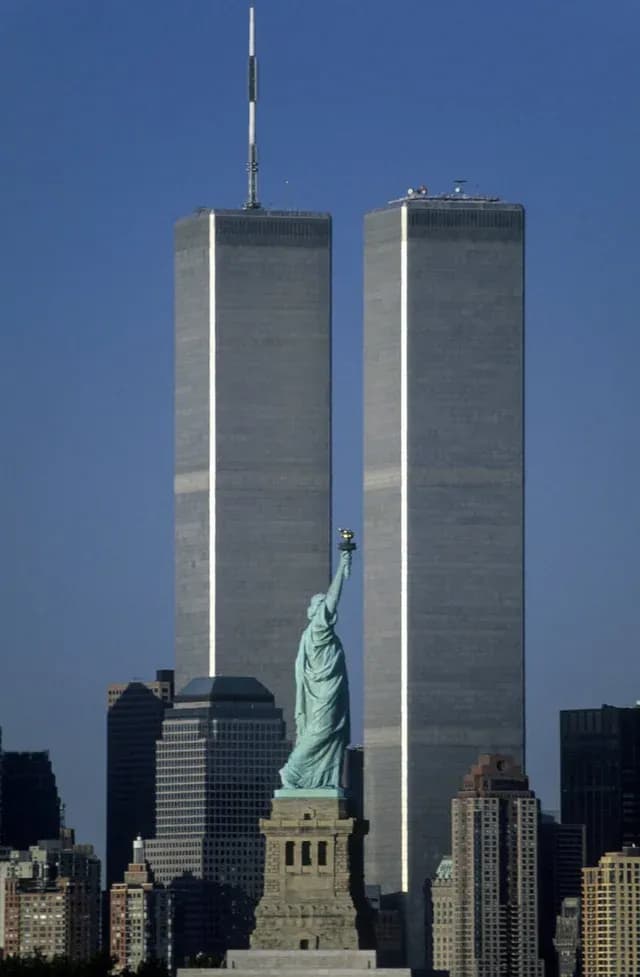
>> A commodity in the global market.. a scientific guide in laboratories.. and a symbol of power in the US Navy
>> Embodies the collapse of a symbol of the American dream and debris stuck in national memory
>> Attempts to replicate the twins in 90 countries under license from the World Trade Centers Association
The World Trade Center towers pierced the Manhattan clouds in the financial district of New York City on the morning of September 11, 2001, as one of the most prominent symbols of economic and industrial power in the modern world. This was their last morning before they turned into dust and ashes.
Steel was the silent structure behind that scene, but it told everything in detail. Thousands of columns, beams, and structural sections were intertwined in a massive engineering system, supporting floors, offices, and thousands of workers, and raising the two buildings to more than 400 meters above the ground.
This steel was of high quality and, at the time, was part of a building, the building was part of a city, and the city was part of the image of America known to the world, whose title was the American Dream.
The two towers embodied the image of this deeply rooted dream in the American psyche in every sense. It is the belief that a person can start from a distant point, rise through their knowledge, work, and ambition, and transform opportunity into success, and success into a better life.
The collapse of the Twin Towers on September 11, 2001, in addition to being an architectural collapse, embodied the collapse of one of America's most globally renowned symbols.
But the story of the steel that supported the towers presents a new paradox that shattered that dream and stunned the American psyche for the past quarter century.
The steel from the heart of Manhattan emerged as scattered debris, then returned to the world as a commodity, to memory as a relic, and to the US Navy as part of a ship named after New York.
• 110 floors of pure ambition
The idea of building the Twin Towers dates back to the 1939 New York World's Fair, when the concept of a center connecting trade with world peace first emerged. The idea resurfaced in the late 1950s when American banker David Rockefeller led efforts to revitalize Lower Manhattan and establish a World Trade Center.
Japanese-American architect Minoru Yamasaki designed the towers as part of a project that the Port Authority of New York and New Jersey undertook to develop, build, and manage.
The Twin Towers were built on the site of the old Radio Row in the heart of Lower Manhattan's financial district, an area that had been a vibrant and bustling commercial center since the 1920s, housing over 400 shops and warehouses selling radios, electronic components, and later televisions.
The entire historic neighborhood was demolished in 1966 to level the ground and begin excavation and foundation work for the Twin Towers.
The towers were erected in this neighborhood to become a testament to industry's ability to touch the sky. They stood tall for twenty-eight years, an icon of global trade and a symbol of the steel age.
Tenants began moving into the North Tower in December 1970, while the World Trade Center complex was officially completed, inaugurated, and opened in April 1973. Each tower had 110 floors... multiple floors of pure ambition.
The towers provided offices for approximately 35,000 people and 430 global and local companies engaged in banking, insurance, stock trading, and commerce, while the World Trade Center complex received about 70,000 tourists, employees, and travelers daily.
• 200,000 tons of steel... from Ground Zero to Fresh Kills
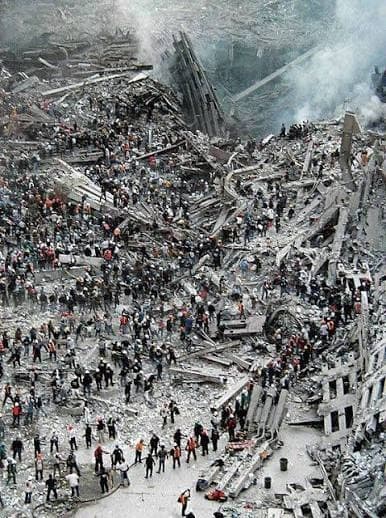
What was once one of the 20th century's most prominent engineering achievements turned into a mountain of rubble.
When the symbol collapsed on September 11, the second journey began for about 200,000 tons of structural steel, with varying resistance grades designed to meet the different requirements of this colossal structure.
While diligent teams were searching for remains, belongings, and evidence, the steel gradually transitioned from being part of the crime scene to being a material for sorting and recovery.
The steel from the towers left Manhattan for sorting yards, then to laboratories and the scrap market, and from there to factories inside and outside the United States. Some was re-smelted and entered a new industrial cycle, some was preserved as scientific evidence in laboratories, some was turned into memorials, while a small portion took one of the most symbolic paths: it returned to the United States within the bow of a warship named after the city of New York, which witnessed the catastrophe.
Data from the National Institute of Standards and Technology (NIST) indicates that the towers used approximately 200,000 tons of structural steel, distributed among the exterior columns, core columns, floor systems, beams, and trusses (structural frameworks composed of interconnected metal bars or angles in triangular shapes, used to support and distribute heavy loads and span areas without the need for internal columns), along with other elements that formed the supporting structure of the two buildings.
When the towers collapsed, the steel mixed with concrete, glass, and furniture, becoming part of a chaotic mass of debris.
The debris began to be handled as a material whose components could be separated, with steel being one of the most important.
The steel left the disaster site by trucks and barges, the same way millions of tons of debris were transported.
A significant portion of the debris was directed to the Fresh Kills landfill on Staten Island, serving as a practical extension of the search, recovery, and management operations for the World Trade Center debris.
By the end of 2001, approximately 795,762 tons of debris had arrived at Fresh Kills, and over 110,000 tons of steel were recycled during that phase.
A report from the New York City Department of Sanitation (DSNY) for 2002-2003 on sorting operations indicates that a total of 1,460,888 tons of World Trade Center materials arrived at Fresh Kills. Of this, 185,727 tons of steel were removed and sent to the renowned recycling center Hugo Neu Schnitzer. The World Trade Center operations there concluded on August 21, 2002, with the last shipment of steel for recycling being processed.
But for everyone who handled it, the steel was more than just metal. Workers at the sorting yards dealt with a material they knew was once part of the place where thousands of people died.
Testimonies from some workers recount that moments of handling the recovered pieces were so heavy they brought tears. Some kept small pieces, while others made souvenirs for families.
In addition to sorting debris, recovery teams at Fresh Kills meticulously examined materials for human remains and personal belongings. The materials arriving from the site were subjected to extremely detailed inspections, including the examination of 4,250 human remains and 9,000 personal items.
• In the lab.. the steel was a guide
The scientific value of the steel became apparent at this stage, as its pieces carried information about their original location, manufacturing marks, properties, and the conditions they were exposed to.
Scientists had to understand how the towers collapsed, so the National Institute of Standards and Technology (NIST) collected steel pieces to study their properties and relate them to the structural system of the two buildings.
Ultimately, the institute possessed 236 structural elements from the World Trade Center steel, including parts of the exterior and interior columns and other components of the floor system.
These pieces were like engineering documents written in steel, bearing manufacturing marks, material properties, and their original location. For example, one recovered piece weighed about 41 tons, and engineers were able to determine its position and that it came from an area between floors 100 and 103 in the North Tower.
Scientists at the time considered the steel a witness, not just scrap. Its role was to help them provide conclusive answers.
• In the Scrap Market
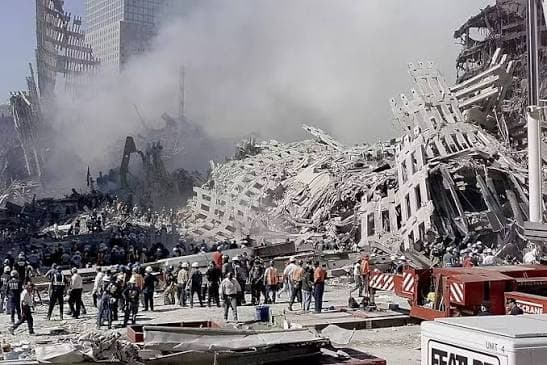
In sorting yards, structural sections, beams, and columns that supported the towers were mixed with the rest of the debris, while the process of separating metal from concrete, glass, and other materials began.
Metal Management Northeast alone recycled about 100,000 tons of World Trade Center steel by April 2002. The steel was cut into 4–5 foot sections and then shipped to steel mills, mostly outside the United States.
Within a few months, the steel moved from the heart of one of the greatest disasters of modern times to the heart of the global commodity market, its previous identity disappearing to enter, according to its industrial destination, a new cycle of melting, remelting, casting, rolling, and shaping, before reappearing as a new product.
Chinese steel mills bought about 50,000 tons of scrap, while other quantities went to recycling facilities in various countries, including Japan, Malaysia, and South Korea.
Notably, large quantities entered the scrap and recycling market, and a portion of it left the United States, was re-melted, and became a commodity in a global market that recognizes no borders or symbols.
The steel disappeared from physical memory, but it did not disappear from the industrial cycle. It may have returned as an industrial product, or perhaps entered a consumer product without any mark revealing its story or original identity, which vanished with its collapse.
• From the Clouds to the Waves
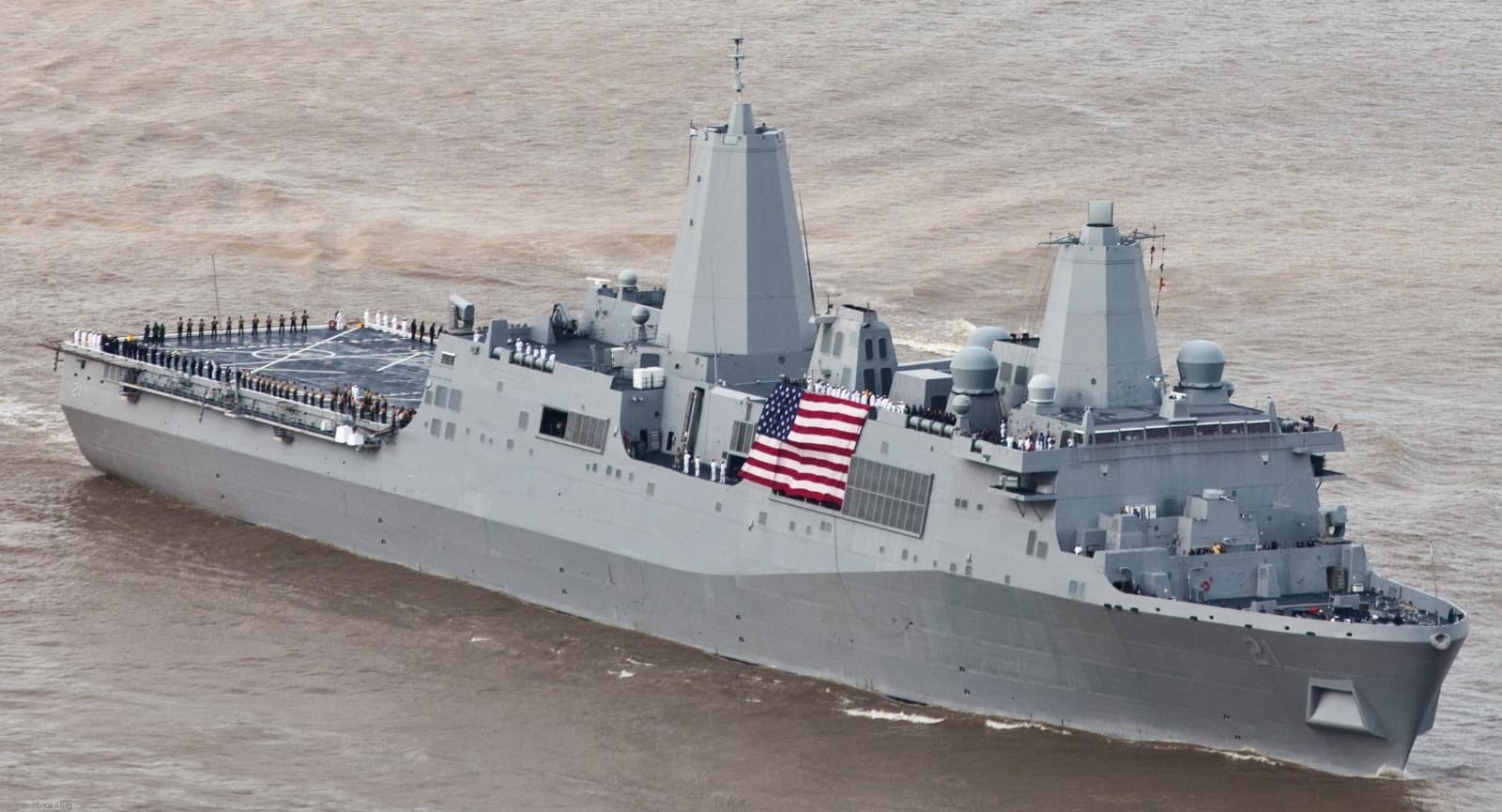
The U.S. Navy decided to use 24 tons of recovered steel from the World Trade Center in the manufacturing process of the bow of the USS New York, and ultimately cast 7.5 metric tons into the forward part of the hull.
The ship entered service in November 2009, and thus a part of the steel that was once part of the towers became molten in the hull of a ship named New York. After the steel of the towers stood tall in the sky, it descended into the water, cutting through the crashing waves, carrying the motto: 'Strength Forged in Sacrifice. Never Forget.'
The city that suffered the attack became the name of a ship carrying, in its bow, a part of the steel that was once part of its towers.
• In National Memory
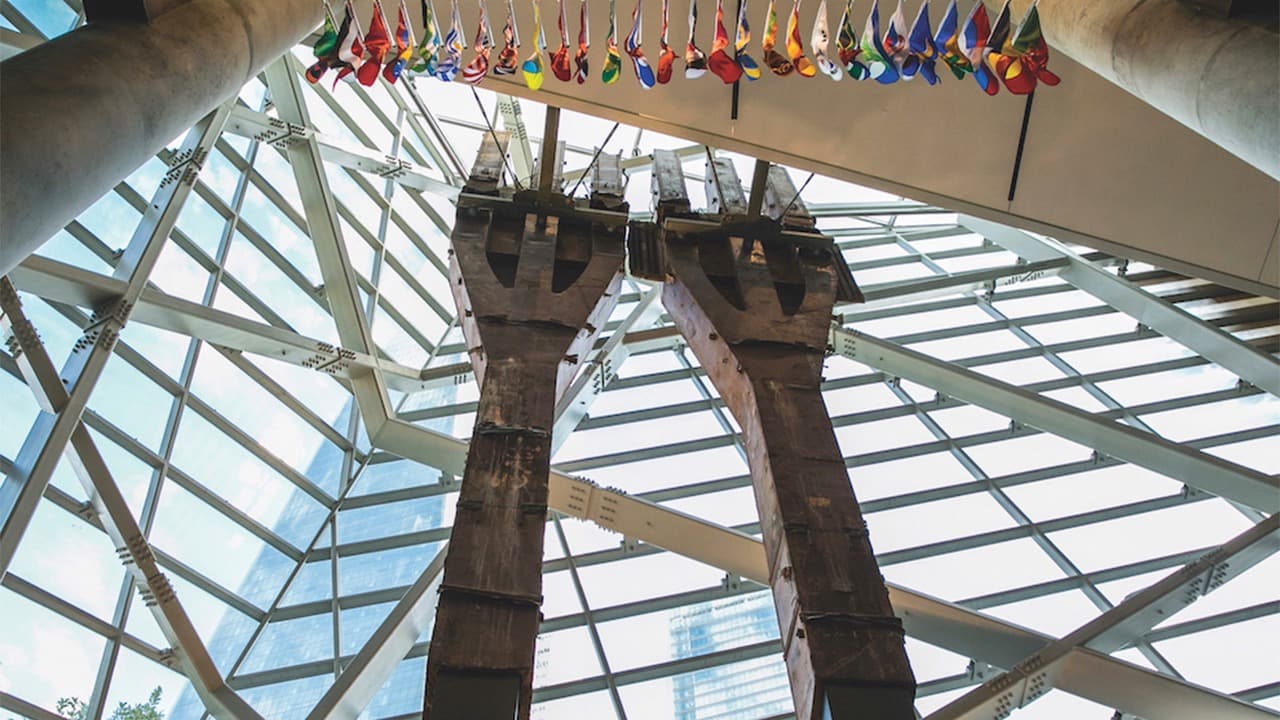
The steel material did not change, but its value did. It was sold by the ton in the scrap market, then became something in memorials that could not be measured by the ton or by price. The same piece that could have entered a recycling company became a historical artifact on American national soil.
Even the rust that covered some of it is not considered a defect needing removal, but has become part of the historical narrative. The twists and bends in the pieces are not distortions in the steel, but rather material evidence of an event that changed a city, a country, and an entire world.
In various cities and towns, twisted steel pieces became part of public squares, memorials, fire stations, and museums.
Over 1,800 pieces were distributed to institutions and communities within and outside the United States for the erection of memorials.
• Global Replication... 325 Centers in 90 Countries
The legacy remained, and the memory did not fade. The idea of the World Trade Center towers in New York was not limited to building two towering structures. From this perspective, the World Trade Centers Association (WTCA) was founded in 1968, the sole entity authorized to grant licenses for the use of the World Trade Center name worldwide. The number of licensed centers reached 323 in 90 countries, and has since risen to over 325 buildings as of May 2020, according to the association's data.
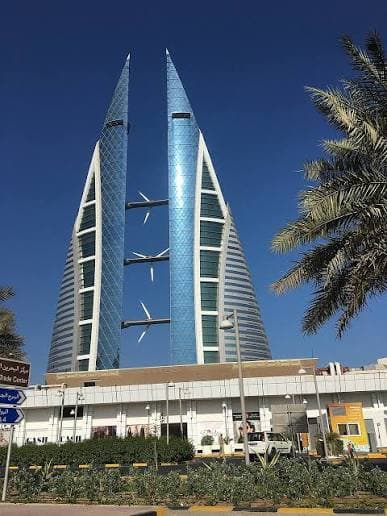
The World Trade Center in Bahrain is a prominent example of replication, consisting of twin towers, each with 50 floors and a height of 240 meters. They are connected by three wind turbines and are located in the heart of the business district on the northern waterfront of Manama.
The project was intentionally designed to be an icon of twins, reminiscent of the New York towers, but with a sustainable dimension.
There were also commercial functional replications, which represent the vast majority, such as those in Dubai, Jeddah, Riyadh, Cairo, and Amman, all of which obtained licenses from the World Trade Centers Association.
Their function is not limited to building twin towers, but rather to consolidating global trade services—offices, chambers of commerce, customs, and investment services—under one roof, just as the original New York complex did, which housed 430 companies and 35,000 employees.
And there are symbolic replications. In China alone, there are over 30 World Trade Centers, and in India, centers in Mumbai, New Delhi, and Bangalore. Every city wants to say it is a gateway for global trade, the same discourse that New York used in 1939 when it first proposed the idea of the center at its World's Fair as a symbol of peace through trade.
Despite all these attempts, which may have succeeded in copying the name and commercial function, they failed to copy the symbolism. The New York towers were a state project built by the Port Authority of New York and New Jersey to revive Lower Manhattan after the demolition of the historic Radio Row neighborhood, while the other centers are private real estate investment projects.
However, the World Trade Center towers were not replicated a second time in their place of origin, New York.
Despite public demands to rebuild them exactly as they were after the September 11 attacks, city authorities decided to construct a new, different complex.
The new project included a single tower, One World Trade Center, with a height of 1,776 feet (541 meters). The number 1,776 symbolizes the year of American independence, and it is taller than the original towers, which were 417 meters high, with a completely different architectural design.
The only replication was of the void, as the memorial was built precisely in the same location as the towers' foundations, in the form of two square pools of the same dimensions, with waterfalls flowing into them, commemorating the victims.
The World Trade Center towers were replicated in dozens of countries around the world, but they did not reach the dream of 110 floors of pure ambition that the towers represented until September 11, 2001.