
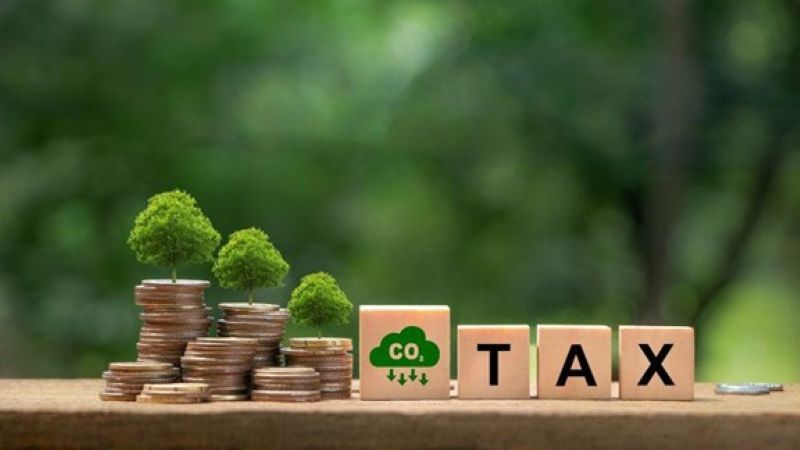
A study by the Centre for Social and Economic Progress (CSEP) estimates that India’s GDP could decline by 0.02–0.03% between 2025 and 2030 due to revenue outflow, unless the impact of the European Union’s Carbon Border Adjustment Mechanism (CBAM) is mitigated through the introduction of a domestic carbon pricing system. According to the analysis, the EU could collect nearly 5,500 crore rupees (€539 million) from Indian exporters in 2030. The report highlights that introducing a domestic carbon tax alongside CBAM could result in a slight 0.01% increase in GDP, as part of the tax revenue would remain within the country, softening negative economic impacts.
Although the share of Indian exports affected by CBAM represents just 0.2% of GDP, around 90% of this figure comes from the ferrous metallurgy sector, making it particularly vulnerable to higher production costs. The researchers outlined three scenarios: Domestic carbon tax only (PCARBON): India would generate revenues equal to 1% of GDP by 2030. PCARBON + CBAM: Results in undistributed income equivalent to 0.5% of GDP, balancing EU trade compliance with domestic economic stability. CBAM only: Leads to a full revenue outflow to the EU, causing negative economic effects. The study recommends channeling carbon tax revenues into green subsidies, industrial decarbonization, targeted household compensation, enhanced energy efficiency, and export diversification beyond the EU market.